
Kyōzon-ha is an entirely new artistic movement proposed and practiced by the artist Toru Kuranuki. It is not merely a set of techniques in painting or sculpture; it is a philosophical practice that reconsiders how human beings relate to the Earth—and to the cosmos itself.
The name derives from a single key concept:
Kyōzon (響存): a worldview in which all things exist by resonating with one another.
Kyōzon-ha is therefore not a “style,” but a declaration of intent: to affirm a primordial condition of the world in which every existence is fundamentally interrelated and responsive.
Kyōzon-ha differs radically from conventional artistic approaches—whether painting with brushes on canvas or shaping clay into form.
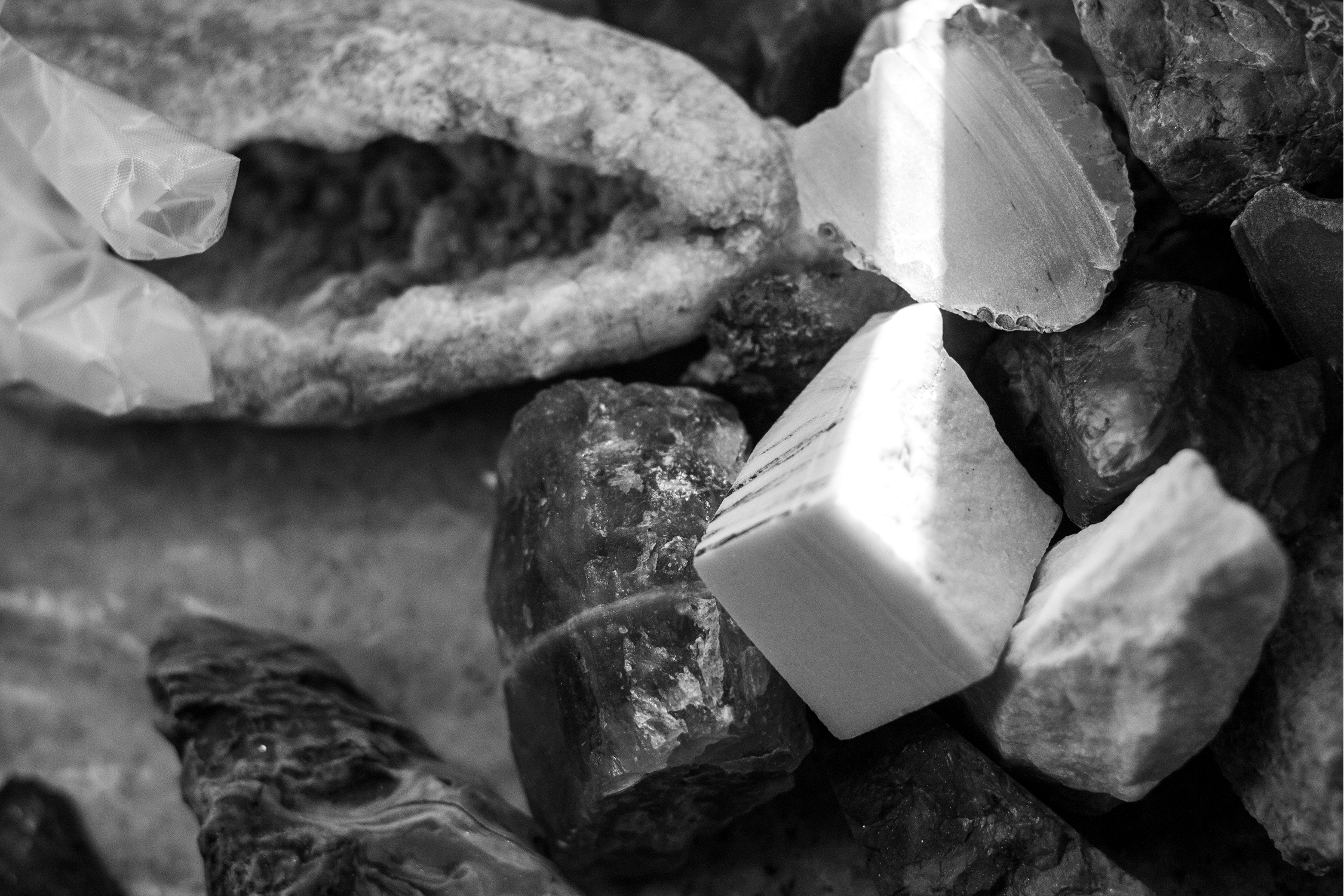
Instead of brush or chisel, Kuranuki takes into his hands fragments of the Earth itself. Kyōzon-ha is a completely new art movement advocated and practiced by the artist. It is not merely a technique, but a grand philosophical practice that re-questions the very way we humans relate to the Earth and the Universe.
Stones polished by rivers over vast time, petrified wood holding the memory of ancient forests, minerals crystallized deep within the planet, and at times even fossilized remnants from tens of millions of years ago—materials that contain geological time. He does not treat them as tools or raw matter, but as equal partners in creation.
By listening, sensing intention, entering into dialogue, and working in collaboration with these presences, the work comes into being.
This is a revolutionary act of making: not the unilateral transformation of nature by human will, but the co-generation of a work through mutual resonance between the human and the material.

Kyōzon-ha embodies the same impulse that drove our ancestors to draw on cave walls tens of thousands of years ago—the foundational human urge to create. By using stone, the oldest material, it seeks—paradoxically—to open the newest possibilities for art.
It is a return to the origin of human creation, and at the same time, a journey that points toward the future of art—and perhaps the future of humanity.
Kyōzon-ha calls on us to listen to the voice of the Earth and to resonate with the world once again.
K Veritas Inc. is a company dedicated to bringing the works and spirit of the Japanese contemporary artist Toru Kuranuki to the world. The name “Veritas,” meaning “truth” in Latin, reflects the company’s aspiration to share—through art—universal truths and profound emotion that transcend time and culture.
At the core of K Veritas is the philosophy of Kyōzon—a term deepened and newly defined through the ongoing dialogue between Toru Kuranuki and the team. Kyōzon refers to an attentive way of relating: listening closely to the “voices” of diverse forms of existence—others, nature, and even technology—and forming relationships of resonance. It goes beyond simple coexistence, regarding difference not as friction to be erased, but as a source of harmony, creativity, and emergent order.
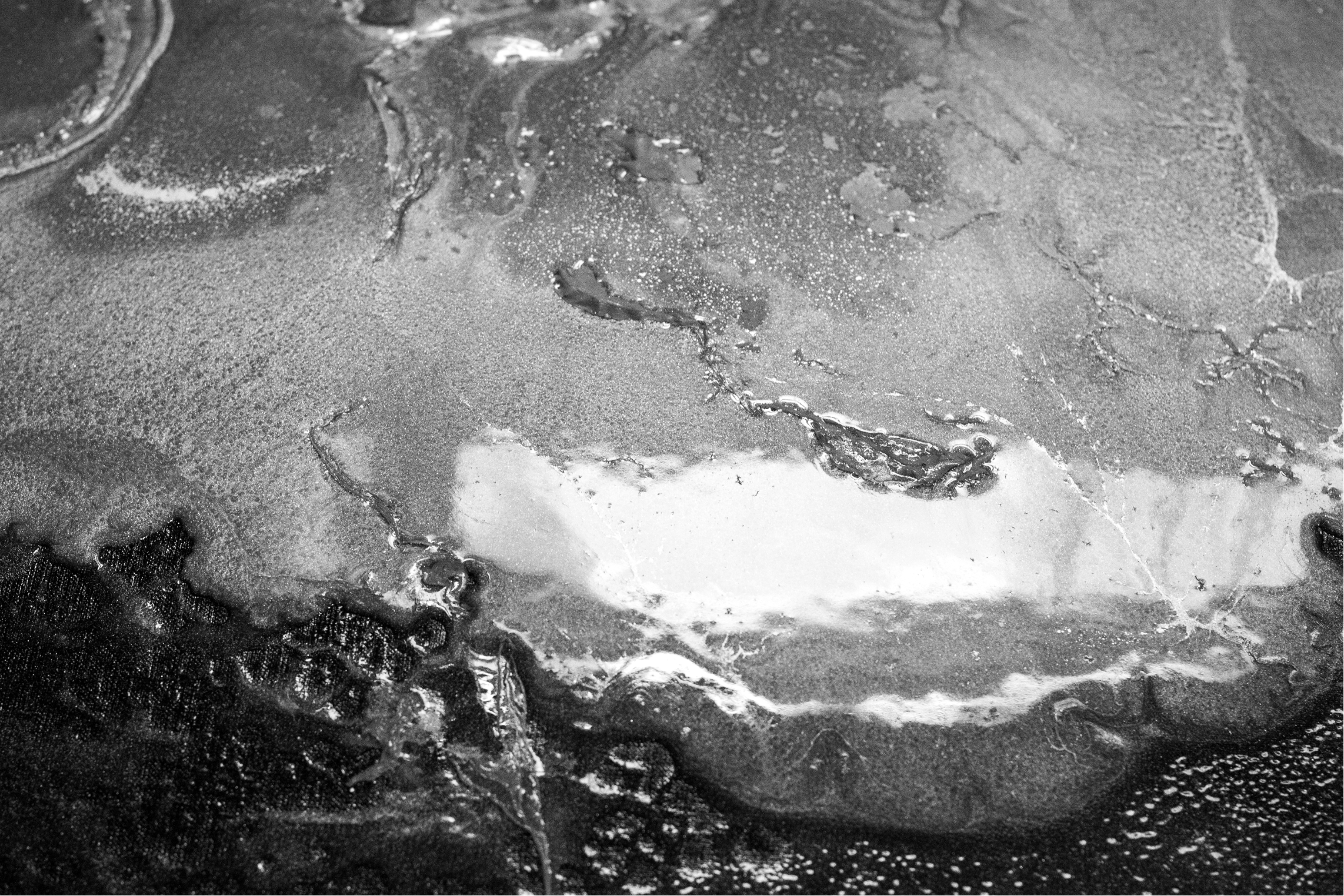
Kuranuki’s artistic practice itself embodies Kyōzon. He confronts stone as a natural presence—listening for the history and intention held within its form, texture, and silence. Rather than imposing human will upon the material, he brings works into being through dialogue.
His art may be understood as a record of resonance between stone and the human—between the Earth’s memory and contemporary perception.
K Veritas, as an “emotion-creating enterprise,” is committed to expanding this worldview internationally. Believing in the power of art, the company works—through the practice of Kyōzon—to help realize a society in which diverse beings resonate with one another and shine more brightly together.